
Last Updated: October 25, 2026
Quick Summary
Comfortable paddling gear for men combines moisture-wicking base layers, appropriate mid and outer layers for water temperature, and paddling-specific shoes designed to dry quickly and provide grip. Quality gear keeps you focused on the water by protecting from sun exposure, reducing chafing, and maintaining proper body temperature throughout your trip.
- Choose synthetic base layers or merino wool instead of cotton, which absorbs water and causes chafing
- Look for base layers with UPF 50+ sun protection that blocks 98% of UV radiation
- Use layering systems for cold water: moisture-wicking base layer, insulating mid-layer, and waterproof outer layer
- Select paddling-specific shoes with drainage holes and aggressive tread patterns for wet grip
- Rinse all gear with fresh water immediately after use and air dry completely before storing
Table of Contents
- Why Comfortable Paddling Gear Matters for Long Days on the Water
- What to Wear Kayaking: Building Your Base Layer
- Kayaking Clothes for Cold Water: Layering Strategies
- Wetsuit vs Dry Suit for Kayaking: Which Offers Better Comfort
- Kayaking Shoes: Footwear for Grip and Comfort
- Shorts and Lower-Body Apparel for Paddling
- Caring for Your Paddling Gear to Extend Its Life
- Outfit Your Next Paddling Adventure
- Frequently Asked Questions
Why Comfortable Paddling Gear Matters for Long Days on the Water
Spending eight hours on the water in the wrong clothes turns a perfect paddling day into pure misery. Your shoulders ache, your thighs chafe, your skin burns, and by hour five you're counting the minutes until you can get off the water. The difference between that experience and a genuinely comfortable paddling adventure often comes down to one thing: choosing the right comfortable paddling gear for men.
At River Life USA, we've watched paddlers make the same mistakes year after year. They grab whatever's on sale, assume any athletic shirt will work, or stick with cotton because it's what they know. Then they wonder why they're exhausted, sunburned, or dealing with rashes by the end of the day.
The stakes are higher than comfort. Proper gear protects you from sun exposure, reduces chafing that can sideline you for days, and keeps you warm or cool depending on conditions.
What to Wear Kayaking: Building Your Base Layer
Your base layer is where everything starts. This is the foundation that either works with your body or against it, and it touches your skin for the entire trip.
The best base layers for paddling are made from synthetic fabrics or merino wool, never cotton. A synthetic base layer like the Spectrum | Men's Rash Guard combines sun protection with quick-dry performance.

Fit matters more than you'd think. A base layer that's too tight restricts your shoulder movement when you're taking strokes. Too loose, and it bunches up under your outer layers or flaps around in the wind.
Quick-Dry Fabrics and Sun Protection
Quick-dry fabrics are non-negotiable for paddling. When you're getting splashed constantly, a fabric that stays wet all day becomes a liability. Synthetic blends dry in minutes once they're out of direct water contact, while natural fibers can stay damp for hours.
Sun protection is equally critical. Paddlers spend hours under direct sunlight with water reflecting UV rays from below. A base layer with UPF protection (ultraviolet protection factor) blocks harmful rays while you're focused on your paddling. Look for fabrics rated UPF 50+, which blocks 98% of UV radiation. This isn't just about avoiding a sunburn, repeated sun exposure accelerates skin aging and increases skin cancer risk.
Fit and Freedom of Movement
A comfortable paddling base layer should feel like a second skin, not a constraint. When you're taking thousands of paddle strokes over a full day, even small fit issues compound into real problems. Your shoulders need full range of motion, your torso needs to rotate freely, and your arms need to move without the fabric riding up or pulling across your chest.
Test your base layer by mimicking your paddling motion before you buy. Raise your arms overhead, rotate your torso, and reach forward as if you're taking a stroke. If the fabric pulls, restricts, or creates pressure points, it's the wrong fit.
Kayaking Clothes for Cold Water: Layering Strategies
Cold-water paddling requires a different approach than warm-weather trips. Your body loses heat rapidly in cold water, and even brief immersion can trigger dangerous responses (the CDC).
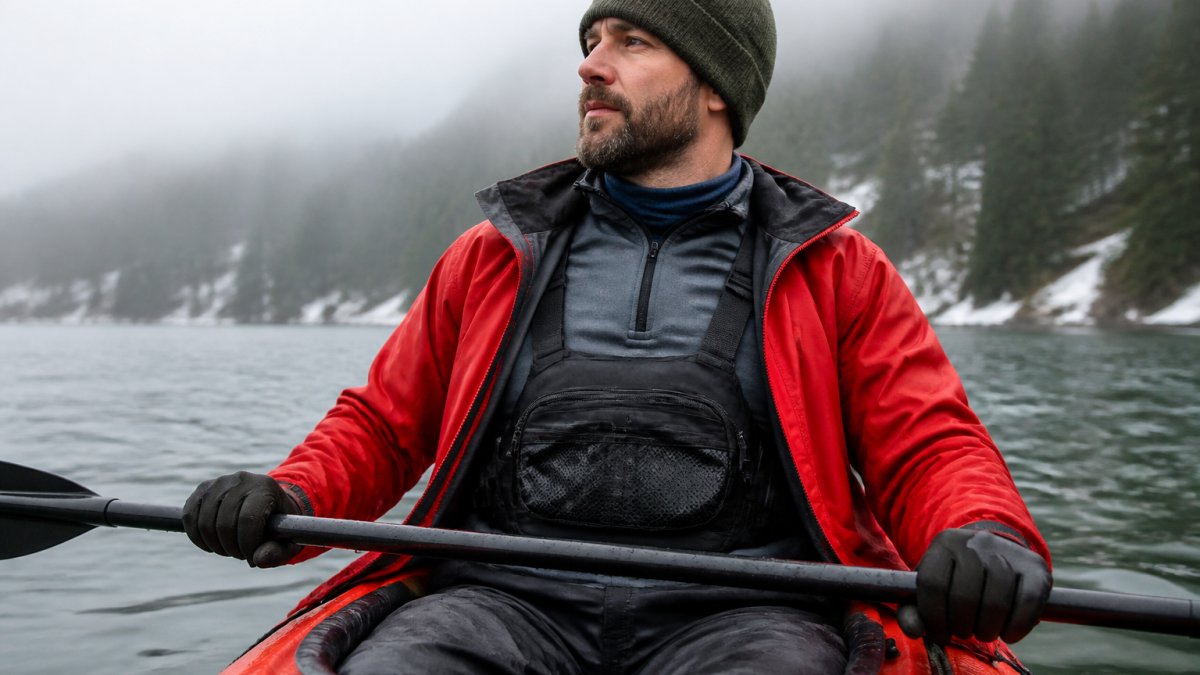
The layering system works by trapping warm air and moving moisture away from your skin. Your base layer handles moisture management. Your mid-layer provides insulation. Your outer layer protects against wind and water. When any layer fails, the whole system breaks down.
Mid-Layer Options for Insulation
Mid-layers for cold-water paddling typically come in two forms: fleece or neoprene. Fleece mid-layers (usually polyester or wool blends) provide warmth while staying relatively lightweight. They compress easily for packing and work well when you need moderate insulation in temperatures above 50°F.
Neoprene mid-layers trap air and provide more insulation in very cold conditions. A neoprene top worn under a waterproof jacket creates a sealed system that keeps your core warm even in near-freezing water. The trade-off is reduced mobility and increased bulk. Neoprene works best when you're committed to cold-water paddling and willing to sacrifice some movement for serious warmth.
Outer Layer Protection
Your outer layer, usually a paddling jacket or spray jacket, serves one critical job: keeping water and wind off your inner layers. A quality paddling jacket has sealed seams, adjustable cuffs that tighten around your wrists, and a hem that stays in place when you're sitting in a kayak.
Look for jackets with reinforced shoulders and back panels where water impact is heaviest. Pit zips (underarm vents) let you regulate temperature without removing the jacket. A hood that doesn't obstruct your vision is essential, you need to see the water and your surroundings at all times.
Wetsuit vs Dry Suit for Kayaking: Which Offers Better Comfort
The choice between a wetsuit and a dry suit depends on water temperature, trip length, and your tolerance for restriction. Both protect you in cold water, but they work differently and feel completely different to wear.
A wetsuit keeps you warm by trapping a thin layer of water against your skin, which your body then heats. They're less expensive, more flexible for movement, and easier to put on and take off.
A dry suit seals water out completely with gaskets at your neck, wrists, and ankles. You stay completely dry, which means you stay warmer longer.
When to Choose a Wetsuit
Choose a wetsuit for recreational paddling in cool water (50-65°F) when you're comfortable getting wet and you don't need maximum insulation. Wetsuits work well for shorter trips under four hours where the water temperature is your main concern. They're also the better choice if you're learning because they're forgiving, small leaks don't ruin your day.
Wetsuit thickness matters: 3mm provides basic protection in moderately cool water, while 5mm handles colder conditions. For paddling, look for wetsuits with reinforced shoulders and torso where you need durability and reduced restriction where you need mobility.
When to Choose a Dry Suit
Choose a dry suit for serious cold-water paddling, extended trips in winter conditions, or any situation where staying completely dry is critical. Dry suits are essential if you're paddling in water below 50°F or if you're spending more than six hours on the water in cool conditions.
Quality matters enormously with dry suits. Cheap versions leak, gaskets fail, and zippers jam. Invest in a suit from a manufacturer known for paddling-specific construction. The initial cost is high, but a good dry suit lasts years and performs when you need it most.
Kayaking Shoes: Footwear for Grip and Comfort
Your feet are often forgotten in paddling gear discussions, but they matter more than most paddlers realize. Wet feet lose heat rapidly, and uncomfortable footwear creates pressure points that can become painful during long trips.
Paddling-specific shoes have drainage holes to let water out quickly and aggressive tread patterns that grip wet surfaces. They're designed to stay on your feet even in current and to provide enough support for walking on slippery boat ramps.
Look for shoes with neoprene or synthetic uppers that dry quickly, secure straps or laces that won't come loose in the water, and soles with deep treads.
Shorts and Lower-Body Apparel for Paddling
Lower-body gear is often overlooked, but paddlers spend hours sitting in wet shorts, and the wrong choice creates serious discomfort. Cotton shorts stay wet for hours and chafe constantly. Regular athletic shorts absorb water and become heavy and restrictive.
Paddling shorts are typically made from quick-dry synthetics with inseams that won't chafe and waistbands that stay secure without cutting off circulation. You can also find women's rash guards designed for paddling protection.
For cold water, consider paddling tights or neoprene bottoms under your shorts. These provide insulation and reduce chafing without the restriction of a full wetsuit.
Caring for Your Paddling Gear to Extend Its Life
Quality paddling gear represents a real investment, and proper care extends its life significantly. Salt water and chlorine damage synthetic fabrics and degrade elastic materials. Sweat and sunscreen accelerate breakdown.
Rinse all gear thoroughly with fresh water immediately after use. This removes salt, chlorine, and minerals that break down fabrics.
Wash paddling clothes in cool water with mild detergent. Hot water breaks down elastic and synthetic fibers. Skip the dryer, heat damages materials.
Check seams and zippers regularly for damage. Small problems become big ones if you ignore them. A leaking seam in a dry suit or a failing zipper can ruin a trip.
Outfit Your Next Paddling Adventure
Building a complete paddling wardrobe takes time and testing. What works for your friend might not work for you, and what works in summer doesn't work in winter. Start with a quality base layer like the River Rats Social Club | Men's Rash Guard or X-Eye Lure | Men's Rash Guard, add appropriate mid and outer layers for your water temperature, and test everything before committing to a full trip.


Pay attention to fit and how gear actually performs on the water, not how it looks hanging in your closet. We've designed every piece with the specific demands of paddling in mind, from quick-dry fabrics that handle constant water contact to seams positioned to eliminate chafe during long days. Float Trip Squad | Men's Rash Guard and our complete paddling collection combine technical performance with the durability you need for regular use.
Frequently Asked Questions
What should men wear for kayaking in warm weather?
In warm water and air conditions, focus on sun protection and breathability. A quick-dry rash guard with UPF rating (like our Spectrum or Float Trip Squad Men's Rash Guard at $44.95) shields your skin from UV rays while allowing sweat to evaporate. Pair it with quick-dry shorts designed for water sports. Avoid cotton entirely, it absorbs water, stays wet, and causes chafing during long paddling sessions. Consider lightweight, breathable fabrics that dry within minutes of leaving the water.
Should you wear cotton while kayaking?
No. Cotton absorbs water and holds moisture against your skin, leading to chafing, discomfort, and prolonged wetness even after you exit the water. It also loses its insulating properties when wet, leaving you cold in cool conditions. Instead, choose synthetic quick-dry fabrics like recycled polyester blends or neoprene that shed water, dry fast, and maintain their performance. Technical paddling apparel is designed specifically to handle the demands of being wet and active.
How do you know if comfortable paddling gear will actually last through a full season of regular use?
Look for reinforced seams, quality stretch fabrics, and construction designed for active water use. River Life USA's rash guards feature flat seams and coverstitch construction to prevent chafing and durability issues. Check care instructions, proper rinsing after each use (to remove salt or chlorine) and correct washing significantly extend gear life. Brands committed to quality materials and construction, especially those made on demand to reduce waste, typically stand behind their products for extended use.
What is the difference between a rashguard and a wetsuit for paddling comfort?
A rash guard (like our $44.95 options) provides sun and wind protection with four-way stretch for comfort and freedom of movement, but offers minimal insulation. It works best in warm to moderate water temperatures. A wetsuit traps a thin layer of water against your skin, which your body heat warms, providing insulation in cold water, but it feels tighter and restricts movement slightly. A dry suit keeps you completely dry for maximum warmth in very cold conditions but is bulkier and more expensive. Choose based on water temperature and how long you'll be paddling.
Ready to upgrade your paddling experience? Explore Cold Water Performance Clothing: A 2026 Guide for deeper insights into layering for challenging conditions, or check out our complete paddling collection to find gear that fits your specific water and weather conditions.

0 comments