
Table of Contents
- Best Lightweight Fishing Shirts for Men: Quick Comparison
- What Makes a Lightweight Fishing Shirt Right for You
- Men's UPF Fishing Shirts: Understanding Sun Protection Standards
- Breathable Fishing Shirts for Men: Ventilation and Comfort
- Quick-Dry Fishing Shirts: Materials That Work Hard
- Hooded Fishing Shirts for Men: Extra Coverage Options
- Fit, Sizing, and Layering for All-Day Fishing
- Care, Durability, and Long-Term Performance
- Frequently Asked Questions
Last Updated: October 16, 2026
Best Lightweight Fishing Shirts for Men: Quick Comparison
Spend eight hours on the water and comfort stops being optional. Lightweight fishing shirts protect you from UV rays, manage sweat, and let you move freely when casting or paddling, but not all lightweight options work the same way.
At River Life USA, we've built our apparel around what anglers actually need: sun protection that doesn't feel like a wetsuit, breathability that keeps you dry, and durability that lasts through seasons of regular use.
Quick Picks:
- Best Overall Value: Spectrum | Men's Rash Guard, balanced protection and comfort at $44.95
- Best for River Float Trips: Float Trip Squad | Men's Rash Guard, designed specifically for weekend adventures
- Best Fishing-Specific Design: X-Eye Lure | Men's Rash Guard, built for casting and paddling mobility
- Best Community Connection: River Rats Social Club | Men's Rash Guard, lightweight performance with authentic river culture
What Makes a Lightweight Fishing Shirt Right for You
Not every lightweight shirt works for every angler. The right choice depends on three factors: sun protection, how the fabric performs in your climate, and whether the fit supports your casting motion without restriction.

UPF Rating and Sun Protection
UPF (Ultraviolet Protection Factor) measures how much UV radiation a fabric blocks. A UPF 50+ shirt blocks 98% of the sun's harmful rays. Skin damage accumulates over years of weekend trips, and sun protection on the water is harder than on land because water reflects UV rays upward.
Look for shirts labeled UPF 50+. The rating comes from the fabric itself, not a coating that washes away. River Life USA's rash guards use high-quality stretch fabric designed to maintain sun protection through repeated use and rinsing, which removes chlorine and salt residue that can break down fabric fibers.
A common mistake is assuming all "performance" fabrics offer the same protection. Some lightweight shirts prioritize breathability over UV blocking, so confirm the UPF rating before buying.
Fabric Weight and Performance
Lightweight doesn't mean thin or fragile. A quality lightweight fishing shirt uses performance polyester blends that are durable, quick-drying, and built to move with your body.
River Life USA's rash guards use 75% recycled polyester and 25% elastane, a blend that delivers four-way stretch and recovers its shape after every cast or paddle stroke. The elastane gives you mobility; the polyester gives you durability and quick-dry performance.
Fabric weight matters for comfort. A shirt weighing 4-5 ounces per square yard feels light against your skin without sagging when wet, while heavier shirts (6-8 ounces) feel restrictive during active fishing. Lighter is better for all-day comfort, as long as the fabric is densely woven enough to resist tearing on rocks or boat railings.
The real test is how the shirt feels after two hours in the sun with water splashes and sweat. A well-designed lightweight shirt dries faster than cotton (which absorbs water and stays heavy) and faster than cheap synthetics that retain moisture.
Fabric Type |
Weight |
Dry Time |
Best For |
Durability |
|---|---|---|---|---|
Recycled polyester blend |
4-5 oz/sq yd |
30-45 min |
Most anglers |
Excellent |
Standard polyester |
5-6 oz/sq yd |
45-60 min |
Budget-conscious |
Good |
Cotton blend |
6-8 oz/sq yd |
2+ hours |
Casual wear |
Fair |
Men's UPF Fishing Shirts: Understanding Sun Protection Standards
UPF ratings aren't marketing, they're measured by how much UV radiation passes through the fabric. UPF 50+ is the highest rating available, blocking 98% of UV rays. UPF 40-49 blocks 96-97%. Below UPF 40, protection drops noticeably.
Fabric construction determines the rating: tightly woven synthetics block more rays than loosely woven cotton, which is why performance fabrics for water sports consistently deliver higher UPF ratings than casual apparel.
River Life USA's rash guards are engineered to maintain their UPF rating through regular use, since the stretch fabric doesn't degrade the way some coated materials do. Rinsing after each use preserves those protective properties, salt and chlorine break down fabric if left to dry on it.
One detail most guides skip: collar and cuff protection. A long-sleeve rash guard covers your forearms and the back of your neck, where sun damage accumulates fastest on the water, while short sleeves leave shoulders and upper arms exposed. For all-day fishing, long sleeves are worth the minimal trade-off in breathability.

Breathable Fishing Shirts for Men: Ventilation and Comfort
Breathability and quick-drying are related but different. A breathable fabric lets air flow through; a quick-drying fabric releases moisture fast. You want both.
Four-way stretch polyester blends excel at both: the fabric's structure allows air circulation while the synthetic material, unlike cotton, doesn't absorb and hold water. In 85-degree heat with 60% humidity, a cotton shirt becomes heavy and clingy while a performance rash guard stays light and moves with you.

Ventilation comes from two sources: the fabric and the design. River Life USA's rash guards use flat ergonomic seams and coverstitch construction, which prevents chafing during repetitive casting and sits flat against your skin for better air circulation than bulky traditional stitching.
Fit affects breathability too. A slim-fit shirt (which River Life USA recommends sizing up for comfort) doesn't trap heat the way an oversized shirt does, close enough for ventilation, loose enough for full range of motion.
Most anglers underestimate how much comfort matters during a long day. A shirt that clings, rides up, or creates hot spots will distract you from fishing; a well-designed lightweight option becomes invisible.
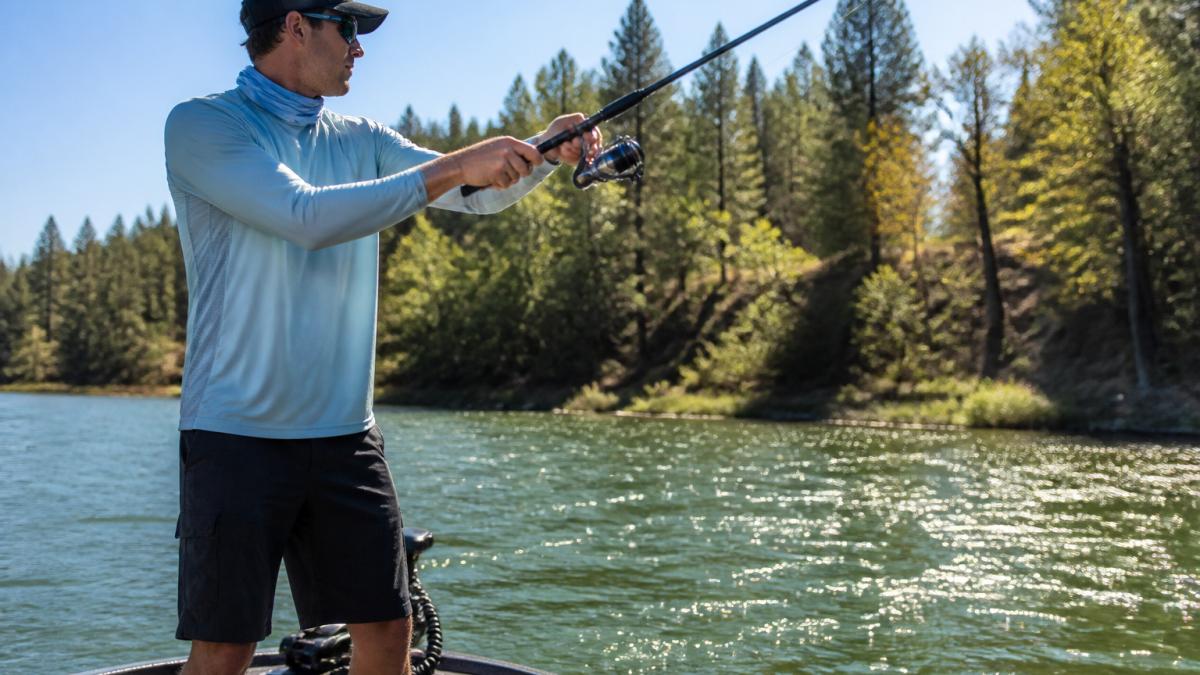
Quick-Dry Fishing Shirts: Materials That Work Hard
Quick-drying matters more on the water than anywhere else, you're dealing with sweat, water splashes, spray from paddling, and the occasional dunking.
Synthetic fabrics dry faster than natural fibers because they don't absorb water into the fiber itself: polyester repels moisture, cotton absorbs it. A polyester rash guard dries in 30-45 minutes in the sun, while a cotton shirt can take 2+ hours and feels cold and clammy the whole time.
The recycled polyester blend River Life USA uses delivers this quick-dry performance while supporting sustainability. Recycled polyester has the same moisture-repelling properties as virgin polyester, so you're not sacrificing performance for environmental responsibility.
Quick-drying also extends the life of your shirt. Moisture sitting on fabric encourages mildew and mold, especially in humid climates, so a fast-drying shirt stays fresher longer between washes and lasts longer overall.
Care matters here: rinsing after each use removes salt and chlorine that trap moisture in the weave, and hang drying beats machine drying for performance fabrics since heat can break down synthetic fibers over time.
Hooded Fishing Shirts for Men: Extra Coverage Options
A hooded fishing shirt adds sun protection to your scalp and ears, which burn easily and are hard to cover with sunscreen alone, plus wind protection on cooler days or when moving fast across the water.
River Life USA's rash guard designs focus on full-body coverage without adding bulk. The long sleeves extend to your wrists; the body extends past your hips to stay tucked in during active movement. For anglers who spend 6+ hours on the water, this coverage makes a real difference in sun damage prevention.
A hood adds about 1-2 ounces, which is negligible, so the trade-off is minimal for significant additional protection. On intense sun days or during peak UV hours (10 a.m. to 4 p.m.), a hooded option is worth considering.
Hood design matters: a well-fitted hood stays in place during casting without restricting peripheral vision, while a poor one slides around or pulls at the neckline.
Fit, Sizing, and Layering for All-Day Fishing
This is where most anglers get it wrong. A rash guard that fits perfectly in the store might feel restrictive after two hours of casting.
River Life USA recommends sizing up from your normal shirt size for a more comfortable, relaxed fit. A slim-fit rash guard in your true size works for swimming or wading, but for casting, paddling, or repetitive arm movement, you need about an inch of space between fabric and skin to move freely without the shirt pulling or riding up.
Layering is often overlooked. A lightweight rash guard works standalone in warm weather, but in spring or fall you can layer it under a lightweight jacket for wind protection, the slim fit doesn't add bulk under outer layers.
Extended sizes are important: fishing gear should fit well regardless of your build. River Life USA carries full size ranges with the same fit specifications across all sizes, so nobody has to choose between too tight and billowing.
The real test is movement. Before committing, simulate your fishing motion, the cast, the paddle stroke, the reach to set a hook. If the shirt pulls or bunches, it's not the right fit, regardless of the size tag.
Care, Durability, and Long-Term Performance
A $45 rash guard should last 3-4 seasons of regular use if you care for it properly. Most anglers replace theirs too soon because they skip basic maintenance.
The rinse habit is non-negotiable. Salt water and chlorine break down synthetic fibers if left to dry on the fabric, so a quick fresh-water rinse after every outing extends the life of your shirt by 2-3 seasons.
Machine washing is fine, but cold water and gentle cycles beat hot water and heavy agitation, hot water weakens elastane fibers and heavy agitation damages coverstitch seams. Air drying is gentlest; if you use a dryer, use low heat.
Pilling, small balls of fiber on the surface, is normal with synthetic blends and doesn't indicate failure. A fabric shaver removes pills without damaging the shirt; pilling is cosmetic and doesn't affect performance or durability.
A well-maintained rash guard maintains its UPF rating and quick-dry properties with age.
River Life USA's rash guards use reinforced seams and high-quality elastane that maintains stretch recovery.
Care Step |
Frequency |
Impact |
|---|---|---|
Rinse with fresh water |
After every use |
Prevents fiber breakdown, extends life 2-3 seasons |
Machine wash (cold, gentle) |
Every 3-4 wearings |
Removes sweat and odor without damage |
Air dry |
Always |
Preserves elastane and seams |
Fabric shaver for pills |
As needed |
Cosmetic only, doesn't affect performance |
Choosing the right lightweight fishing shirt comes down to three things: sun protection you can trust, breathability that keeps you comfortable for hours, and a fit that supports your casting motion.
Frequently Asked Questions
What does UPF mean on a fishing shirt?
UPF stands for Ultraviolet Protection Factor. It measures how effectively fabric blocks UV rays from the sun. A UPF 50+ rating means the fabric blocks 98% of UVA and UVB rays, making it ideal for long hours on the water. Men's UPF fishing shirts with this rating provide reliable sun protection during extended casting and paddling sessions.
What is the best material for a lightweight fishing shirt?
Recycled polyester blended with elastane is an excellent choice for lightweight fishing shirts. This combination offers four-way stretch for mobility during casting, quick-drying performance after water contact, and durability through repeated use. The fabric recovers its shape and provides breathability without excess weight, making it ideal for all-day comfort on the water.
Do fishing shirts dry quickly?
Yes, quick-dry fishing shirts made from performance polyester fabrics dry significantly faster than cotton. Polyester-elastane blends shed water quickly and evaporate moisture rapidly, keeping you comfortable if you get splashed or wade into shallow water. Quick-dry fishing shirts are essential for maintaining comfort during long fishing trips where water contact is frequent.
How should a fishing shirt fit?
A fishing shirt should fit with enough room for unrestricted casting and paddling motion. Slim-fitted designs work well when sized up one size for a relaxed, comfortable fit. The shirt should have extra length to stay tucked in during active movement, and flat seams prevent chafing during long days on the water. Proper fit balances coverage with freedom of movement.
0 comments